Original: $15.95
-65%$15.95
$5.58The Story
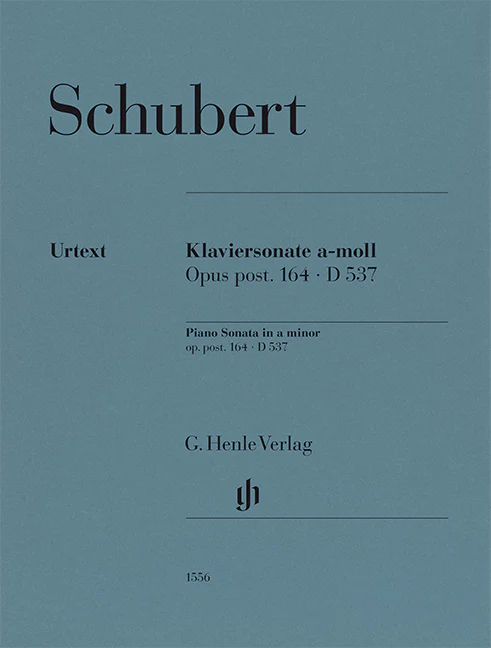
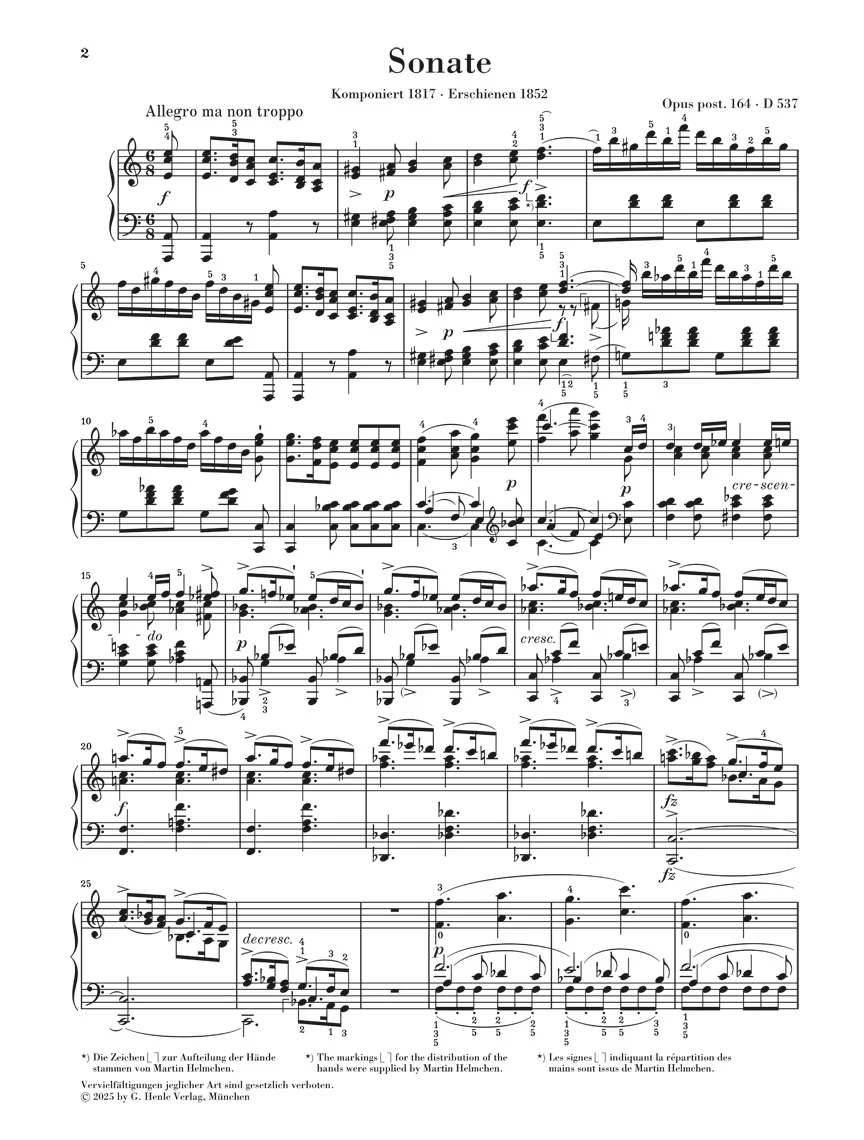
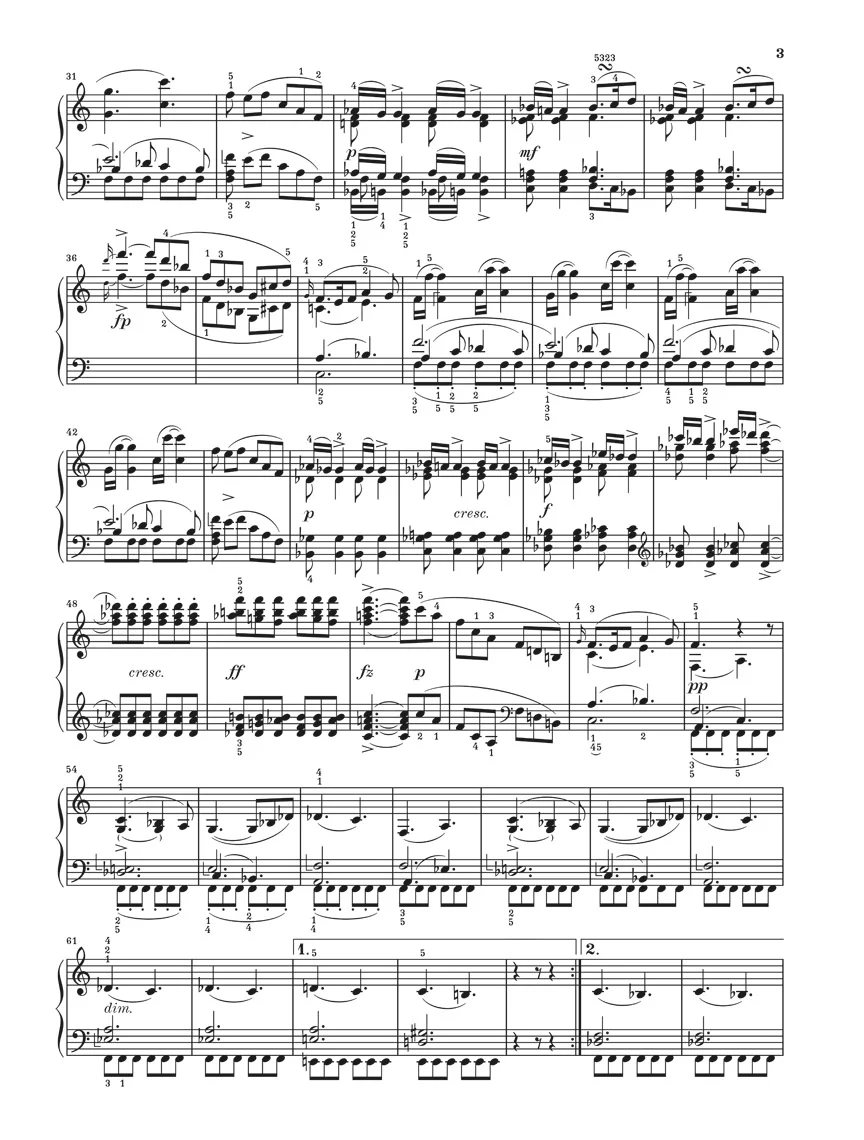
Franz Schubert seems to have been particularly attracted to a-minor. Not just one but three of his piano sonatas are in this key. The earliest of them, D 537, was composed in March 1817 and was simultaneously his first completed piano sonata ever. It is characterised by concise brevity. The three-movement form dispenses with the usual scherzo. It is far removed from the drama of its a-minor sibling works; meandering modulations often lead to distant harmonic regions and lighten the mood to major - significantly, the sonata also ends in A major. Henle's Urtext edition is based on the autograph, which is preserved in the Bibliothèque nationale in Paris; a contemporary manuscript copy and the posthumous first edition were only used for comparison purposes. The preface by Schubert expert Andrea Lindmayr-Brandl and the detailed comment section provide information about the work's genesis and about open questions concerning the musical text. The fingerings by renowned Schubert interpreter Martin Helmchen are a further plus point of this new edition.
Details & Craftsmanship
Every detail has been carefully considered to bring you the perfect product.
Details & Craftsmanship
Every detail has been carefully considered to bring you the perfect product.
Description
Franz Schubert seems to have been particularly attracted to a-minor. Not just one but three of his piano sonatas are in this key. The earliest of them, D 537, was composed in March 1817 and was simultaneously his first completed piano sonata ever. It is characterised by concise brevity. The three-movement form dispenses with the usual scherzo. It is far removed from the drama of its a-minor sibling works; meandering modulations often lead to distant harmonic regions and lighten the mood to major - significantly, the sonata also ends in A major. Henle's Urtext edition is based on the autograph, which is preserved in the Bibliothèque nationale in Paris; a contemporary manuscript copy and the posthumous first edition were only used for comparison purposes. The preface by Schubert expert Andrea Lindmayr-Brandl and the detailed comment section provide information about the work's genesis and about open questions concerning the musical text. The fingerings by renowned Schubert interpreter Martin Helmchen are a further plus point of this new edition.