🎉 Up to 70% Off Selected ItemsShop Sale

$25.20
Original: $72.00
-65%Choral Monuments Studies of 11—
$72.00
$25.20The Story
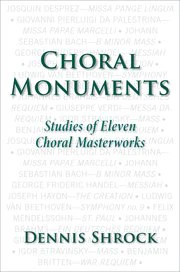
Choral Monuments provides extensive material about eleven epoch-making choral masterworks that span the history of Western culture. Included are: Missa Pange lingua(Josquin Desprez); Missa Papae Marcelli (G. P. da Palestrina); B Minor Mass (J. S. Bach); Messiah (G. F. Handel); The Creation (Joseph Haydn); Symphony #9 (Ludwig van Beethoven); St. Paul (Felix Mendelssohn); Ein deutsches Requiem (Johannes Brahms); Messa da Requiem (Giuseppe Verdi); Mass (Igor Stravinsky); and War Requiem (Benjamin Britten). The works are presented in separate chapters, with each chapter divided into three basic sections-history, analysis, and performance practice.
Discussions of history are focused on relevancies-the genesis of the designated work in reference to the composer's total choral output, the work's place within the musical environment and social climate of its time, and essential features of the work that make it noteworthy. In addition, the compositional history addresses three other factors: the work's public reception and critical response, both at the time of its composition and in ensuing years; the history of score publications, detailing the various differences between editions; and the texts of the composition. The material regarding textual treatment, which often includes the complete texts of the works being discussed, concentrates on primary concerns of the text's usage; also included in the discussion are noteworthy aspects of texts separate from the music as well as biographical details of librettists and poets, if appropriate.
The analysis section of each chapter outlines and describes musical forms and other types of compositional organization, including parody technique, mirror structures, and motto repetitions, as well as salient compositional characteristics that directly relate and contribute to the work's artistic stature. Numerous charts and musical examples illustrate the discussions.
The discussion of performance practices includes primary source quotations about a wide range of topics, from performing forces, tempo, and phrasing of each work to specific issues such as tactus, text underlay, musica ficta, metric accentuation, and ornamentation.
Discussions of history are focused on relevancies-the genesis of the designated work in reference to the composer's total choral output, the work's place within the musical environment and social climate of its time, and essential features of the work that make it noteworthy. In addition, the compositional history addresses three other factors: the work's public reception and critical response, both at the time of its composition and in ensuing years; the history of score publications, detailing the various differences between editions; and the texts of the composition. The material regarding textual treatment, which often includes the complete texts of the works being discussed, concentrates on primary concerns of the text's usage; also included in the discussion are noteworthy aspects of texts separate from the music as well as biographical details of librettists and poets, if appropriate.
The analysis section of each chapter outlines and describes musical forms and other types of compositional organization, including parody technique, mirror structures, and motto repetitions, as well as salient compositional characteristics that directly relate and contribute to the work's artistic stature. Numerous charts and musical examples illustrate the discussions.
The discussion of performance practices includes primary source quotations about a wide range of topics, from performing forces, tempo, and phrasing of each work to specific issues such as tactus, text underlay, musica ficta, metric accentuation, and ornamentation.
Description
Choral Monuments provides extensive material about eleven epoch-making choral masterworks that span the history of Western culture. Included are: Missa Pange lingua(Josquin Desprez); Missa Papae Marcelli (G. P. da Palestrina); B Minor Mass (J. S. Bach); Messiah (G. F. Handel); The Creation (Joseph Haydn); Symphony #9 (Ludwig van Beethoven); St. Paul (Felix Mendelssohn); Ein deutsches Requiem (Johannes Brahms); Messa da Requiem (Giuseppe Verdi); Mass (Igor Stravinsky); and War Requiem (Benjamin Britten). The works are presented in separate chapters, with each chapter divided into three basic sections-history, analysis, and performance practice.
Discussions of history are focused on relevancies-the genesis of the designated work in reference to the composer's total choral output, the work's place within the musical environment and social climate of its time, and essential features of the work that make it noteworthy. In addition, the compositional history addresses three other factors: the work's public reception and critical response, both at the time of its composition and in ensuing years; the history of score publications, detailing the various differences between editions; and the texts of the composition. The material regarding textual treatment, which often includes the complete texts of the works being discussed, concentrates on primary concerns of the text's usage; also included in the discussion are noteworthy aspects of texts separate from the music as well as biographical details of librettists and poets, if appropriate.
The analysis section of each chapter outlines and describes musical forms and other types of compositional organization, including parody technique, mirror structures, and motto repetitions, as well as salient compositional characteristics that directly relate and contribute to the work's artistic stature. Numerous charts and musical examples illustrate the discussions.
The discussion of performance practices includes primary source quotations about a wide range of topics, from performing forces, tempo, and phrasing of each work to specific issues such as tactus, text underlay, musica ficta, metric accentuation, and ornamentation.
Discussions of history are focused on relevancies-the genesis of the designated work in reference to the composer's total choral output, the work's place within the musical environment and social climate of its time, and essential features of the work that make it noteworthy. In addition, the compositional history addresses three other factors: the work's public reception and critical response, both at the time of its composition and in ensuing years; the history of score publications, detailing the various differences between editions; and the texts of the composition. The material regarding textual treatment, which often includes the complete texts of the works being discussed, concentrates on primary concerns of the text's usage; also included in the discussion are noteworthy aspects of texts separate from the music as well as biographical details of librettists and poets, if appropriate.
The analysis section of each chapter outlines and describes musical forms and other types of compositional organization, including parody technique, mirror structures, and motto repetitions, as well as salient compositional characteristics that directly relate and contribute to the work's artistic stature. Numerous charts and musical examples illustrate the discussions.
The discussion of performance practices includes primary source quotations about a wide range of topics, from performing forces, tempo, and phrasing of each work to specific issues such as tactus, text underlay, musica ficta, metric accentuation, and ornamentation.