🎉 Up to 70% Off Selected ItemsShop Sale

$13.28
Original: $37.95
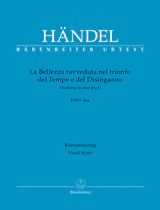
-65%Handel La Bellezza ravveduta nel trionfo del Tempo e del Disinganno HWV 46a—
$37.95
$13.28The Story
Handel composed his first Italian oratorio “La Bellezza ravveduta nel trionfo del Tempo e del Disinganno” in 1707. It is based on an allegorical moral libretto written by Cardinal Benedetto Pamphili who also commissioned this work.
Disinganno (Illumination) and Tempo (Time) try to get the young, beautiful and frivolous Bellezza (Beauty) to recognise the true values of life and to act accordingly. The audience accompanies Bellezza in her spiritual development, in which she increasingly distances herself from Piacere (Pleasure) and listens more and more to Tempo and Disinganno.
The oratorio contains some of the most beautiful music Handel ever composed. This includes the enchanting aria “Lascia la spina”, in which he uses the music of the sarabande from the opera “Almira”, composed in Hamburg in 1704, and which then achieved immortal fame in “Rinaldo” (1711) as “Lascia ch’io pianga”.
Disinganno (Illumination) and Tempo (Time) try to get the young, beautiful and frivolous Bellezza (Beauty) to recognise the true values of life and to act accordingly. The audience accompanies Bellezza in her spiritual development, in which she increasingly distances herself from Piacere (Pleasure) and listens more and more to Tempo and Disinganno.
The oratorio contains some of the most beautiful music Handel ever composed. This includes the enchanting aria “Lascia la spina”, in which he uses the music of the sarabande from the opera “Almira”, composed in Hamburg in 1704, and which then achieved immortal fame in “Rinaldo” (1711) as “Lascia ch’io pianga”.
Description
Handel composed his first Italian oratorio “La Bellezza ravveduta nel trionfo del Tempo e del Disinganno” in 1707. It is based on an allegorical moral libretto written by Cardinal Benedetto Pamphili who also commissioned this work.
Disinganno (Illumination) and Tempo (Time) try to get the young, beautiful and frivolous Bellezza (Beauty) to recognise the true values of life and to act accordingly. The audience accompanies Bellezza in her spiritual development, in which she increasingly distances herself from Piacere (Pleasure) and listens more and more to Tempo and Disinganno.
The oratorio contains some of the most beautiful music Handel ever composed. This includes the enchanting aria “Lascia la spina”, in which he uses the music of the sarabande from the opera “Almira”, composed in Hamburg in 1704, and which then achieved immortal fame in “Rinaldo” (1711) as “Lascia ch’io pianga”.
Disinganno (Illumination) and Tempo (Time) try to get the young, beautiful and frivolous Bellezza (Beauty) to recognise the true values of life and to act accordingly. The audience accompanies Bellezza in her spiritual development, in which she increasingly distances herself from Piacere (Pleasure) and listens more and more to Tempo and Disinganno.
The oratorio contains some of the most beautiful music Handel ever composed. This includes the enchanting aria “Lascia la spina”, in which he uses the music of the sarabande from the opera “Almira”, composed in Hamburg in 1704, and which then achieved immortal fame in “Rinaldo” (1711) as “Lascia ch’io pianga”.