Original: $44.95
-65%$44.95
$15.73The Story
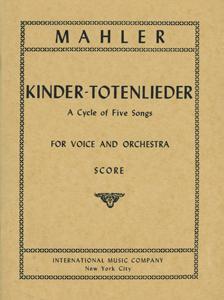
Gustav Mahler documented his preference for certain literary genres by setting to music 14 pieces from Des Knaben Wunderhorn (Lieder from the Youth’s Magic Horn) over a period of almost ten years, music that he created while and in between working on his symphonic oeuvre. At the same time, he also gave life to a musical genre which before was not very widely employed: the ballad-like, humorous orchestra lied.
Early in his life, Mahler found a source for the linguistic basis of his vocal compositions, a source that was said to be available to him in book form only after the composition of his own work Lieder eines fahren den Gesellen (Songs of A Wayfarer): the widely known and read 19th century ‘folk song’ collection of poems titled Des Knaben Wunderhorn, publication of which had been begun by Romanticists Achim von Arnim and Clemens Brentano in 1805. This is to say that Mahler at that time went back exclusively to ‘old German’ literature in his vocal compositions. Alte deutsche Lieder (Old German Songs) is the original subtitle of the collection of folk songs.
His treatment of the textual models far exceeds the process usually understood as selection and setting to music. Mahler’s artistic re-arrangement not just affects individual phrases, but instead whole passages and stanzas, which are often replaced by his own words or verses. His reasoning behind this process, which extended towards a technique of montage, was that the Wunderhorn texts are ‘boulders of rock for one to shape in his own way’, as he allegedly stated. Accordingly, for the composer, the Wunderhorn texts are part of his compositional creation and structure.
Table of contents:
Der Schildwache Nachtlied
Verlorne Müh'
Trost im Unglück
Das himmlische Leben
Wer hat dies Liedel erdacht?
Das irdische Leben
Urlicht
Des Antonius von Padua Fischpredigt
Rheinlegendchen
Lob des hohen Verstandes
Lied des Verfolgten im Turm
Wo die schönen Trompeten blasen
Revelge
Der Tamboursg'sell
Description
Gustav Mahler documented his preference for certain literary genres by setting to music 14 pieces from Des Knaben Wunderhorn (Lieder from the Youth’s Magic Horn) over a period of almost ten years, music that he created while and in between working on his symphonic oeuvre. At the same time, he also gave life to a musical genre which before was not very widely employed: the ballad-like, humorous orchestra lied.
Early in his life, Mahler found a source for the linguistic basis of his vocal compositions, a source that was said to be available to him in book form only after the composition of his own work Lieder eines fahren den Gesellen (Songs of A Wayfarer): the widely known and read 19th century ‘folk song’ collection of poems titled Des Knaben Wunderhorn, publication of which had been begun by Romanticists Achim von Arnim and Clemens Brentano in 1805. This is to say that Mahler at that time went back exclusively to ‘old German’ literature in his vocal compositions. Alte deutsche Lieder (Old German Songs) is the original subtitle of the collection of folk songs.
His treatment of the textual models far exceeds the process usually understood as selection and setting to music. Mahler’s artistic re-arrangement not just affects individual phrases, but instead whole passages and stanzas, which are often replaced by his own words or verses. His reasoning behind this process, which extended towards a technique of montage, was that the Wunderhorn texts are ‘boulders of rock for one to shape in his own way’, as he allegedly stated. Accordingly, for the composer, the Wunderhorn texts are part of his compositional creation and structure.
Table of contents:
Der Schildwache Nachtlied
Verlorne Müh'
Trost im Unglück
Das himmlische Leben
Wer hat dies Liedel erdacht?
Das irdische Leben
Urlicht
Des Antonius von Padua Fischpredigt
Rheinlegendchen
Lob des hohen Verstandes
Lied des Verfolgten im Turm
Wo die schönen Trompeten blasen
Revelge
Der Tamboursg'sell