Original: $59.95
-65%$59.95
$20.98The Story
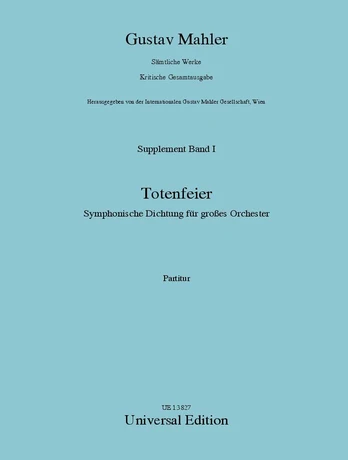
Mahler’s Todtenfeier (as he spelt the title) was originally conceived in 1888 as the first movement of a new symphony in C minor; up to that time he had written no large-scale work since his early cantata Das klagende Lied in 1880.
At the urging of Marion von Weber, the wife of the famous composer’s grandson, Mahler returned to composing in Leipzig, which led to the first of the Wunderhorn lieder and the works we know today as the Symphony No. 1 and the first movement of the Symphony No. 2 in C minor.
After completing the latter work, Mahler wrote a programme draft for the first movement:
“At the grave of a beloved person. His struggle, his suffering and desire pass before the mind’s eye. Questions obtrude: what does Death mean? – is there a continuation?”
Mahler conducted the Totenfeier as an independent work only once, on 16 March 1896 in Berlin, viz. after the premiere of the complete Second Symphony (on 13 December 1895).
Mahler evidently still had poetical associations with this composition. The programme also featured the Songs of a Wayfarer and the First Symphony; his confidant Natalia Bauer-Lechner recalls, “The substance of all these numbers is so painful and tragic that Gustav himself said: anyone who has heard that must be quite devastated” […].
On that occasion, the Todtenfeier was indubitably played from the handwritten performance material (score and parts) which had been used for the full symphony the previous December; the programme bills the work “Todtenfeier (1st movement from the Symphony for large orchestra in C minor).”
- Symphonic poem (1888)
- in C minor
- for orchestra
- early version of the 2nd Symphony's first movement
Description
Mahler’s Todtenfeier (as he spelt the title) was originally conceived in 1888 as the first movement of a new symphony in C minor; up to that time he had written no large-scale work since his early cantata Das klagende Lied in 1880.
At the urging of Marion von Weber, the wife of the famous composer’s grandson, Mahler returned to composing in Leipzig, which led to the first of the Wunderhorn lieder and the works we know today as the Symphony No. 1 and the first movement of the Symphony No. 2 in C minor.
After completing the latter work, Mahler wrote a programme draft for the first movement:
“At the grave of a beloved person. His struggle, his suffering and desire pass before the mind’s eye. Questions obtrude: what does Death mean? – is there a continuation?”
Mahler conducted the Totenfeier as an independent work only once, on 16 March 1896 in Berlin, viz. after the premiere of the complete Second Symphony (on 13 December 1895).
Mahler evidently still had poetical associations with this composition. The programme also featured the Songs of a Wayfarer and the First Symphony; his confidant Natalia Bauer-Lechner recalls, “The substance of all these numbers is so painful and tragic that Gustav himself said: anyone who has heard that must be quite devastated” […].
On that occasion, the Todtenfeier was indubitably played from the handwritten performance material (score and parts) which had been used for the full symphony the previous December; the programme bills the work “Todtenfeier (1st movement from the Symphony for large orchestra in C minor).”
- Symphonic poem (1888)
- in C minor
- for orchestra
- early version of the 2nd Symphony's first movement