
The Story
On the opera stage, the tenor is often the most eminent protagonist. Whether as ardent lover or tragic hero, he is in the limelight to show lyrical sensitivity, sonorous euphony and smoothness, a maximum of nuances. The vocal range creates high expectations and provides an extraordinary aura.
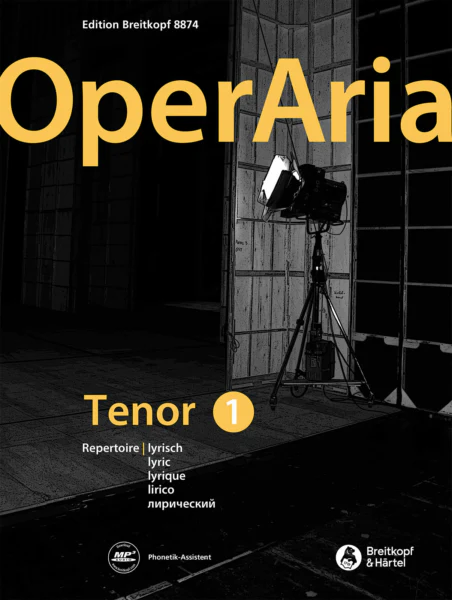
The three volumes for tenor represent the grand finale of the most comprehensive collection of repertoire for all vocal genres, with 16 volumes.
“Our goal is to give the user a modern-day, systematically structured vocal coach who satisfies the demands of present-day theater practice. At long last a consistent repertoire and a well-ordered conflation of respective audition arias for all vocal genres.” (Peter Anton Ling, editors)
OperAria – repertoire anthology of opera arias according to vocal criteria (range, tessitura, specifics, type of aria) with due regard to practical aspects of musical and theatrical nature (style, era, role type, national provenance)
with comments on the arias
- information on the composer, the librettist, the work, the range and of versions or casting
- a short synopsis of the contents illuminating the basic dramatic constellation in the context of the opera’s plot
- an evaluation from the singer’s point of view
with “phonetic assistant” and “text assistant”
- aria texts in the original language spoken by native speakers as an audio file (mp3)
- aria texts in German and English translations as a text file (pdf)
Pieces
- Mozart: Konstanze! Dich wiederzusehen / O wie ängstlich from Don Giovanni, K. 527
- Mozart: Dalla sua pace from Don Giovanni, K. 527
- Mozart: Il mio tesoro intanto from Don Giovanni, K. 527
- Mozart: Un’aura amorosa from Così fan tutte, K. 588
- Mozart: Dies Bildnis ist bezaubernd schön from Die Zauberflöte (The Magic Flute), K. 620
- Weber: Was ich dann tu' from Die drei Pintos (The 3 Pintos), Anh. 5
- Rossini: Languir per una bella from L'Italiana in Algeri
- Rossini: Ecco ridente in cielo from The Barber of Seville (Il barbiere di Siviglia)
- Donizetti: Una furtiva lagrima from L'elisir d'amore, A. 36
- Donizetti: Ah ! mes amis from La Figlia del Regimento
- Donizetti: Povero Ernesto! / Cercherò lontana terra from Don Pasquale, A. 64
- Pasculli: Favorita del Re! / Spirto gentil from Concerto on themes from Donizetti's 'La Favorita'
- Bellini: A te, o cara from I Puritani
- O. Nicolai: Horch, die Lerche singt im Hain from Die lustige Weiber von Windsor (The Merry Wives of Windsor)
- Flotow: Ach! so fromm from Martha (Der Markt Zu Richmond) (1847)
- Verdi: Questa o quella from Rigoletto
- Verdi: La donna è mobile from Rigoletto
- Verdi: Lunge da lei / De’ miei bollenti spiriti from La Traviata
- Verdi: Dal labbro il canto estasïato vola from Falstaff
- Gounod: Quel trouble inconnu / Salut ! demeure chaste et p from Faust
- Lalo: Puisqu'on ne peut fléchir / Vainement, ma bien ai from Le roi d'Ys
- Delibes: Prendre le dessin / Fantaisie aux divins mensonge from Lakmé
- Bizet: Je crois entendre encore from Les Pêcheurs de perles (The Pearl Fishers)
- Tchaikovsky: Kuda, kuda from Yevgeny Onegin (Eugene Onegin), ČW 5, Op. 24
- Massenet: Instant charmant / En fermant les yeux from Manon
- Puccini: Addio fiorito asil from Madama Butterfly
- Godard: Jocelyn, Op. 100
Description
On the opera stage, the tenor is often the most eminent protagonist. Whether as ardent lover or tragic hero, he is in the limelight to show lyrical sensitivity, sonorous euphony and smoothness, a maximum of nuances. The vocal range creates high expectations and provides an extraordinary aura.
The three volumes for tenor represent the grand finale of the most comprehensive collection of repertoire for all vocal genres, with 16 volumes.
“Our goal is to give the user a modern-day, systematically structured vocal coach who satisfies the demands of present-day theater practice. At long last a consistent repertoire and a well-ordered conflation of respective audition arias for all vocal genres.” (Peter Anton Ling, editors)
OperAria – repertoire anthology of opera arias according to vocal criteria (range, tessitura, specifics, type of aria) with due regard to practical aspects of musical and theatrical nature (style, era, role type, national provenance)
with comments on the arias
- information on the composer, the librettist, the work, the range and of versions or casting
- a short synopsis of the contents illuminating the basic dramatic constellation in the context of the opera’s plot
- an evaluation from the singer’s point of view
with “phonetic assistant” and “text assistant”
- aria texts in the original language spoken by native speakers as an audio file (mp3)
- aria texts in German and English translations as a text file (pdf)
Pieces
- Mozart: Konstanze! Dich wiederzusehen / O wie ängstlich from Don Giovanni, K. 527
- Mozart: Dalla sua pace from Don Giovanni, K. 527
- Mozart: Il mio tesoro intanto from Don Giovanni, K. 527
- Mozart: Un’aura amorosa from Così fan tutte, K. 588
- Mozart: Dies Bildnis ist bezaubernd schön from Die Zauberflöte (The Magic Flute), K. 620
- Weber: Was ich dann tu' from Die drei Pintos (The 3 Pintos), Anh. 5
- Rossini: Languir per una bella from L'Italiana in Algeri
- Rossini: Ecco ridente in cielo from The Barber of Seville (Il barbiere di Siviglia)
- Donizetti: Una furtiva lagrima from L'elisir d'amore, A. 36
- Donizetti: Ah ! mes amis from La Figlia del Regimento
- Donizetti: Povero Ernesto! / Cercherò lontana terra from Don Pasquale, A. 64
- Pasculli: Favorita del Re! / Spirto gentil from Concerto on themes from Donizetti's 'La Favorita'
- Bellini: A te, o cara from I Puritani
- O. Nicolai: Horch, die Lerche singt im Hain from Die lustige Weiber von Windsor (The Merry Wives of Windsor)
- Flotow: Ach! so fromm from Martha (Der Markt Zu Richmond) (1847)
- Verdi: Questa o quella from Rigoletto
- Verdi: La donna è mobile from Rigoletto
- Verdi: Lunge da lei / De’ miei bollenti spiriti from La Traviata
- Verdi: Dal labbro il canto estasïato vola from Falstaff
- Gounod: Quel trouble inconnu / Salut ! demeure chaste et p from Faust
- Lalo: Puisqu'on ne peut fléchir / Vainement, ma bien ai from Le roi d'Ys
- Delibes: Prendre le dessin / Fantaisie aux divins mensonge from Lakmé
- Bizet: Je crois entendre encore from Les Pêcheurs de perles (The Pearl Fishers)
- Tchaikovsky: Kuda, kuda from Yevgeny Onegin (Eugene Onegin), ČW 5, Op. 24
- Massenet: Instant charmant / En fermant les yeux from Manon
- Puccini: Addio fiorito asil from Madama Butterfly
- Godard: Jocelyn, Op. 100


