Original: $65.00
-65%$65.00
$22.75The Story
by Julian Budden
Marked by extraordinary research and enhanced by hundreds of musical illustrations, this monumental study follows the development of Verdi's oeuvre from his earliest opera Oberto to his final work, Falstaff. In writing the first edition of this classic work--which appeared to great acclaim in 1973--Julian Budden mined the vast resources of European archives to provide a groundbreaking interpretation of Verdi's work, and along the way discovered much new material, including an unpublished additional aria for I Due Foscari. Now available in a revised edition, The Operas of Verdi is now brought up to date in light of the most recent scholarship, making it more useful and entertaining than ever.
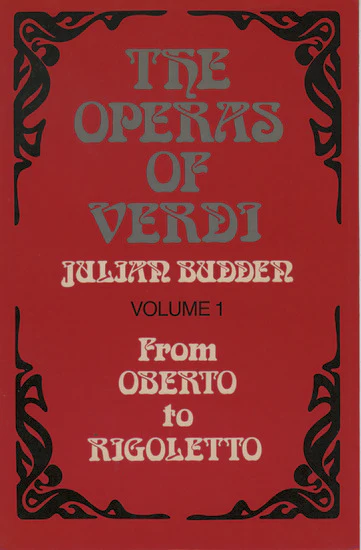
Volume 1 traces the organic growth and development of the composer's style from 1839 to 1851--from Oberto to Rigoletto--and examines each opera in detail, offering a full account of its dramatic and historical origins as well as a brief critical evaluation. More than 350 musical examples make the significance of these early operas to Verdi's developing style especially clear.
In the second volume, Budden covers those operas written during the decadence of the post-Rossini period. During this time Verdi, having exhausted the simple lyricism found in such works as Il Trovatore and La Traviata, found new life as he directly confronted the masters of the Paris opera with his Les Vêpres Siciliennes. The new scale and variety of musical thought that can be sensed in the Italian operas which followed is shown here to culminate in La Forza del Destino.
The third and final volume of the study covers the quarter century which saw grand opera on the Parisian model established throughout Italy, and the spread of cosmopolitan influences that convinced many that Italian music was losing its identity. Verdi produced his four last and greatest operas during this time--Don Carlos, Aida, Otello, and Falstaff--operas which helped inaugurate "versimo," in which a new, recognizably Italian idiom was realized.
These three volumes cover every aspect of Verdi's rich and varied operatic achievement. Every lover of opera in particular and music in general will want a set in their library.
Description
by Julian Budden
Marked by extraordinary research and enhanced by hundreds of musical illustrations, this monumental study follows the development of Verdi's oeuvre from his earliest opera Oberto to his final work, Falstaff. In writing the first edition of this classic work--which appeared to great acclaim in 1973--Julian Budden mined the vast resources of European archives to provide a groundbreaking interpretation of Verdi's work, and along the way discovered much new material, including an unpublished additional aria for I Due Foscari. Now available in a revised edition, The Operas of Verdi is now brought up to date in light of the most recent scholarship, making it more useful and entertaining than ever.
Volume 1 traces the organic growth and development of the composer's style from 1839 to 1851--from Oberto to Rigoletto--and examines each opera in detail, offering a full account of its dramatic and historical origins as well as a brief critical evaluation. More than 350 musical examples make the significance of these early operas to Verdi's developing style especially clear.
In the second volume, Budden covers those operas written during the decadence of the post-Rossini period. During this time Verdi, having exhausted the simple lyricism found in such works as Il Trovatore and La Traviata, found new life as he directly confronted the masters of the Paris opera with his Les Vêpres Siciliennes. The new scale and variety of musical thought that can be sensed in the Italian operas which followed is shown here to culminate in La Forza del Destino.
The third and final volume of the study covers the quarter century which saw grand opera on the Parisian model established throughout Italy, and the spread of cosmopolitan influences that convinced many that Italian music was losing its identity. Verdi produced his four last and greatest operas during this time--Don Carlos, Aida, Otello, and Falstaff--operas which helped inaugurate "versimo," in which a new, recognizably Italian idiom was realized.
These three volumes cover every aspect of Verdi's rich and varied operatic achievement. Every lover of opera in particular and music in general will want a set in their library.