Original: $22.99
-65%$22.99
$8.05The Story
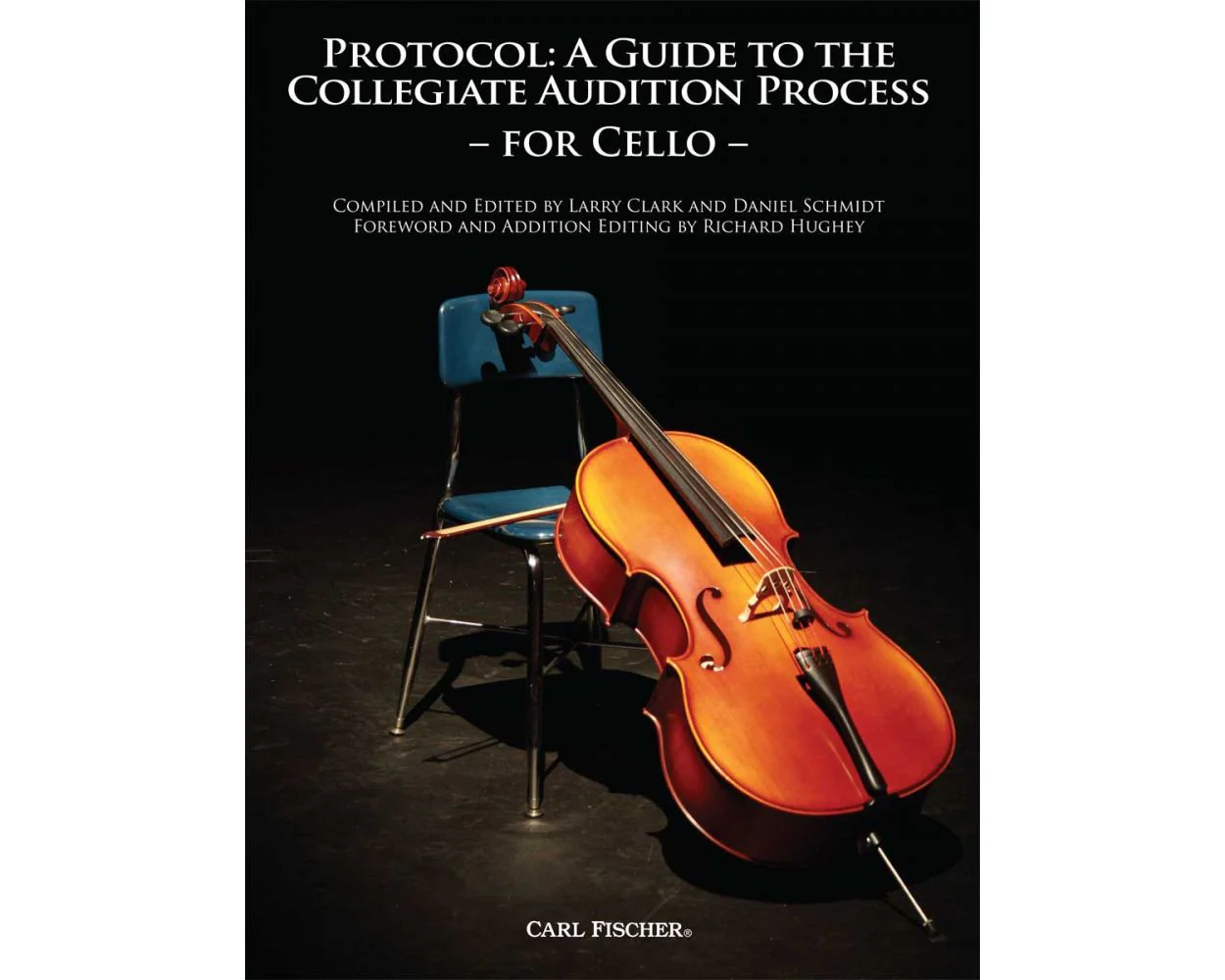
Compiled and edited by Larry Clark and Daniel Schmidt
Providing useful reference and audition material for college-bound string players, the Protocol series was created by college/university music educators and include the most frequently requested audition requirements from many universities. Not only does it help build a player’s repertoire, but it also exposes students to the expectations of the audition process, creating a comfort level that allows for the best audition possible. Students will go into their auditions completely prepared with help from this series.
Contents:
- Foreword by Richard Hughey
- Preface
- About Doris Gazda
- About Larry Clark and Daniel Schmidt
- How to Use This Book
- How to Take an Audition
- Ear-Training and Music- Theory Placement Exams
- Considerations for Choosing an Institution
- Repertoire Included on Most Lists of Required Audition Material
- Major Scales and Arpeggios
- Chromatic Scale
- Minor Scales and Arpeggios
- Symphony No. 35 in D Major ("Haffner"), K. 385 (movement IV) — Wolfgang Amadeus Mozart
- Symphony No. 5 in C Minor, Op. 67 (movement II) — Ludwig van Beethoven
- Scherzo from "A Midsummer Night's Dream, Op. 61" — Felix Mendelssohn
- Symphony No. 2 in D Major, Op. 73 (movement II) — Johannes Brahms
- Symphony No. 8 in G Major, Op. 88 ( movement I) — Antonín Dvořák
- Etude No. 11 from Modern Method for Violoncello, Vol. 2 — Stephen De'ak
- Etude Op. 11, No. 4 — Joseph Merk
- Etude Op. 25, No. 1 — Alfredo Piatti
- Suite No. 1 in G Major for Cello, BWV 1007 — Johann Sebastian Bach
- Scherzo, Op. 12, No. 2 — Daniel François van Goens
- The Swan from "The Carnival of the Animals" — Camille Saint-Saëns
- Concerto No. 1 in A Minor, Op. 33 — Camille Saint Saëns
Description
Compiled and edited by Larry Clark and Daniel Schmidt
Providing useful reference and audition material for college-bound string players, the Protocol series was created by college/university music educators and include the most frequently requested audition requirements from many universities. Not only does it help build a player’s repertoire, but it also exposes students to the expectations of the audition process, creating a comfort level that allows for the best audition possible. Students will go into their auditions completely prepared with help from this series.
Contents:
- Foreword by Richard Hughey
- Preface
- About Doris Gazda
- About Larry Clark and Daniel Schmidt
- How to Use This Book
- How to Take an Audition
- Ear-Training and Music- Theory Placement Exams
- Considerations for Choosing an Institution
- Repertoire Included on Most Lists of Required Audition Material
- Major Scales and Arpeggios
- Chromatic Scale
- Minor Scales and Arpeggios
- Symphony No. 35 in D Major ("Haffner"), K. 385 (movement IV) — Wolfgang Amadeus Mozart
- Symphony No. 5 in C Minor, Op. 67 (movement II) — Ludwig van Beethoven
- Scherzo from "A Midsummer Night's Dream, Op. 61" — Felix Mendelssohn
- Symphony No. 2 in D Major, Op. 73 (movement II) — Johannes Brahms
- Symphony No. 8 in G Major, Op. 88 ( movement I) — Antonín Dvořák
- Etude No. 11 from Modern Method for Violoncello, Vol. 2 — Stephen De'ak
- Etude Op. 11, No. 4 — Joseph Merk
- Etude Op. 25, No. 1 — Alfredo Piatti
- Suite No. 1 in G Major for Cello, BWV 1007 — Johann Sebastian Bach
- Scherzo, Op. 12, No. 2 — Daniel François van Goens
- The Swan from "The Carnival of the Animals" — Camille Saint-Saëns
- Concerto No. 1 in A Minor, Op. 33 — Camille Saint Saëns