Original: $10.95
-65%$10.95
$3.83The Story
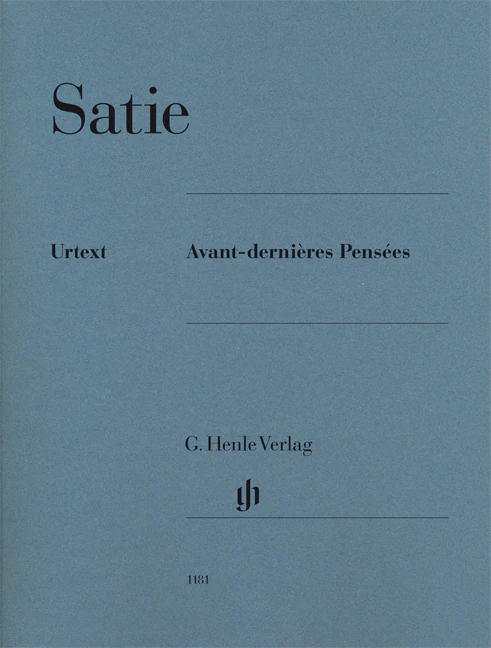
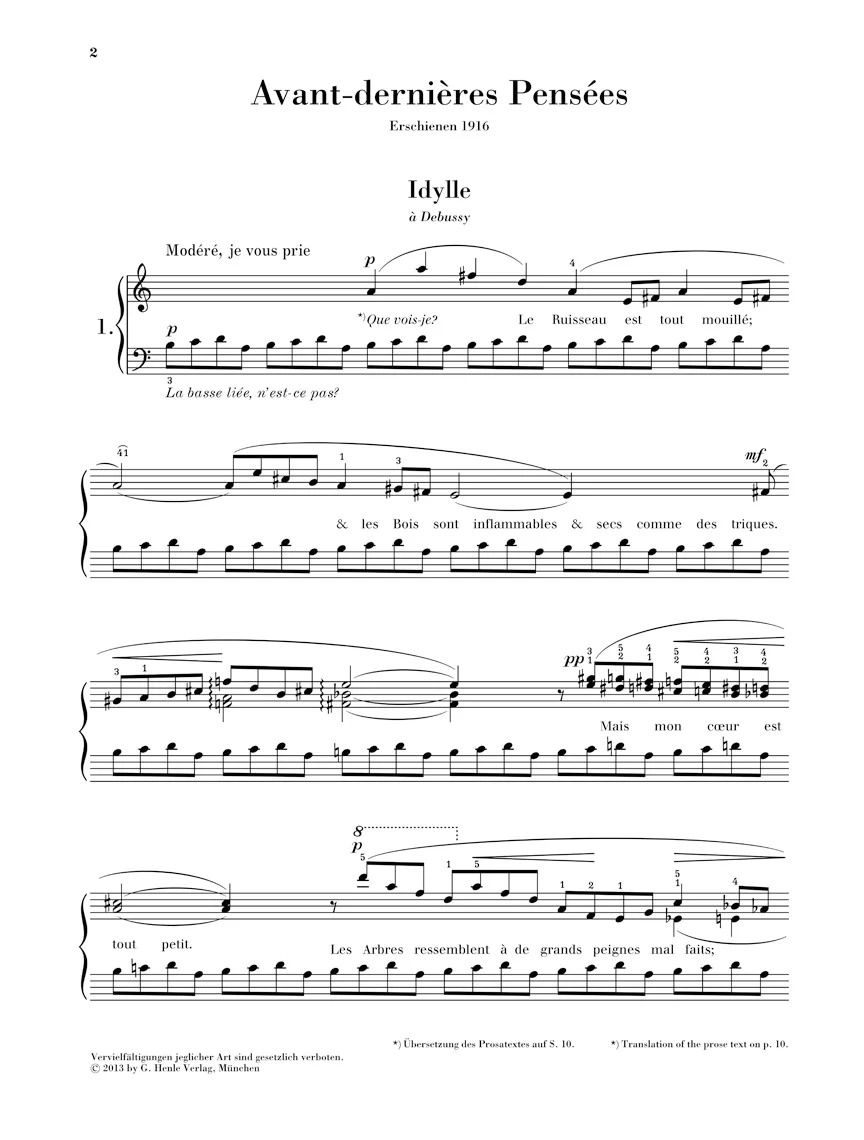
In a typically humorous manner Satie countered the myth of the great master's "last thought" with his "Next-to-last thoughts" (Avant-dernières Pensées). As was usual with his piano works from 1912 onwards, each of the three highly distinctive pieces with their sound sensitive piano settings contained a short whimsical story printed in the musical text as a subtext, which is more or less closely connected with the music. Satie dedicated his "Next-to-last thoughts" to prominent contemporaries: Claude Debussy (for no. 1 "Idylle"), with whom he was close friends, Paul Dukas (no. 2 "Aubade", in English "Dawn serenade"), whose music he greatly admired, and Albert Roussel (no. 3 "Méditation"), his former teacher of counterpoint at the Schola Cantorum in Paris.
Details & Craftsmanship
Every detail has been carefully considered to bring you the perfect product.
Description
In a typically humorous manner Satie countered the myth of the great master's "last thought" with his "Next-to-last thoughts" (Avant-dernières Pensées). As was usual with his piano works from 1912 onwards, each of the three highly distinctive pieces with their sound sensitive piano settings contained a short whimsical story printed in the musical text as a subtext, which is more or less closely connected with the music. Satie dedicated his "Next-to-last thoughts" to prominent contemporaries: Claude Debussy (for no. 1 "Idylle"), with whom he was close friends, Paul Dukas (no. 2 "Aubade", in English "Dawn serenade"), whose music he greatly admired, and Albert Roussel (no. 3 "Méditation"), his former teacher of counterpoint at the Schola Cantorum in Paris.