Original: $59.95
-65%$59.95
$20.98The Story
For Piano, Clarinet (or Violin) and Cello
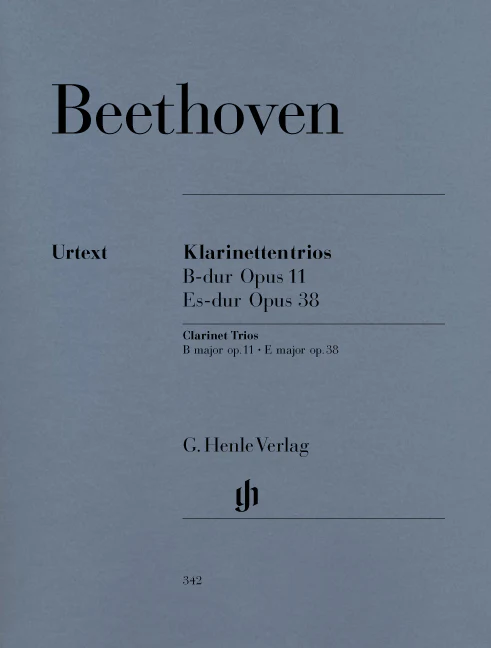
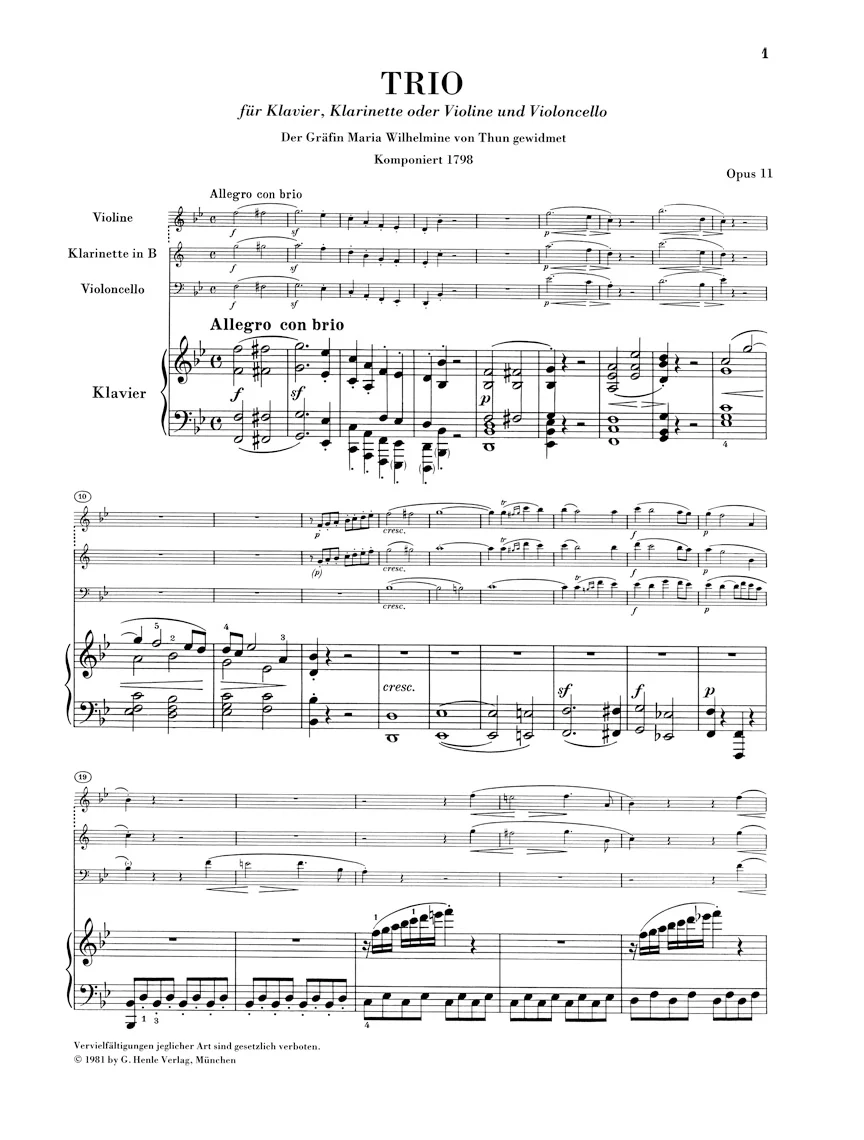
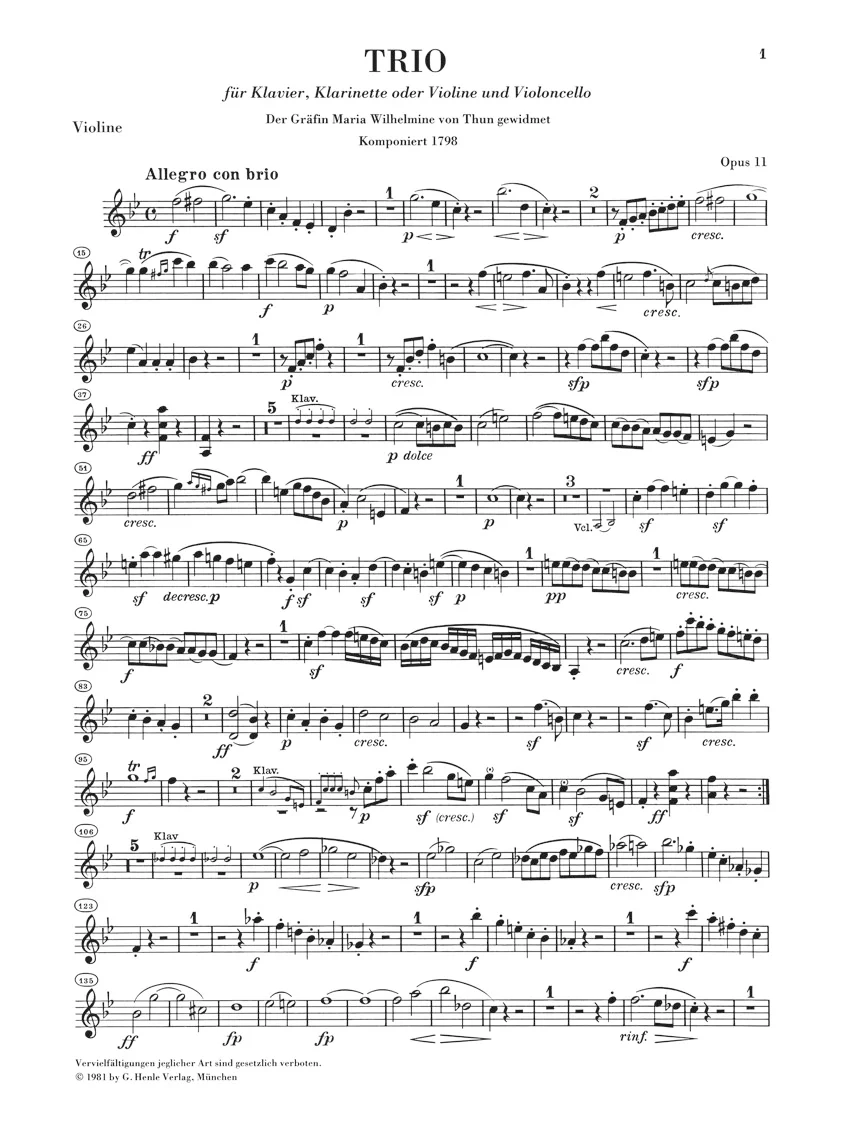
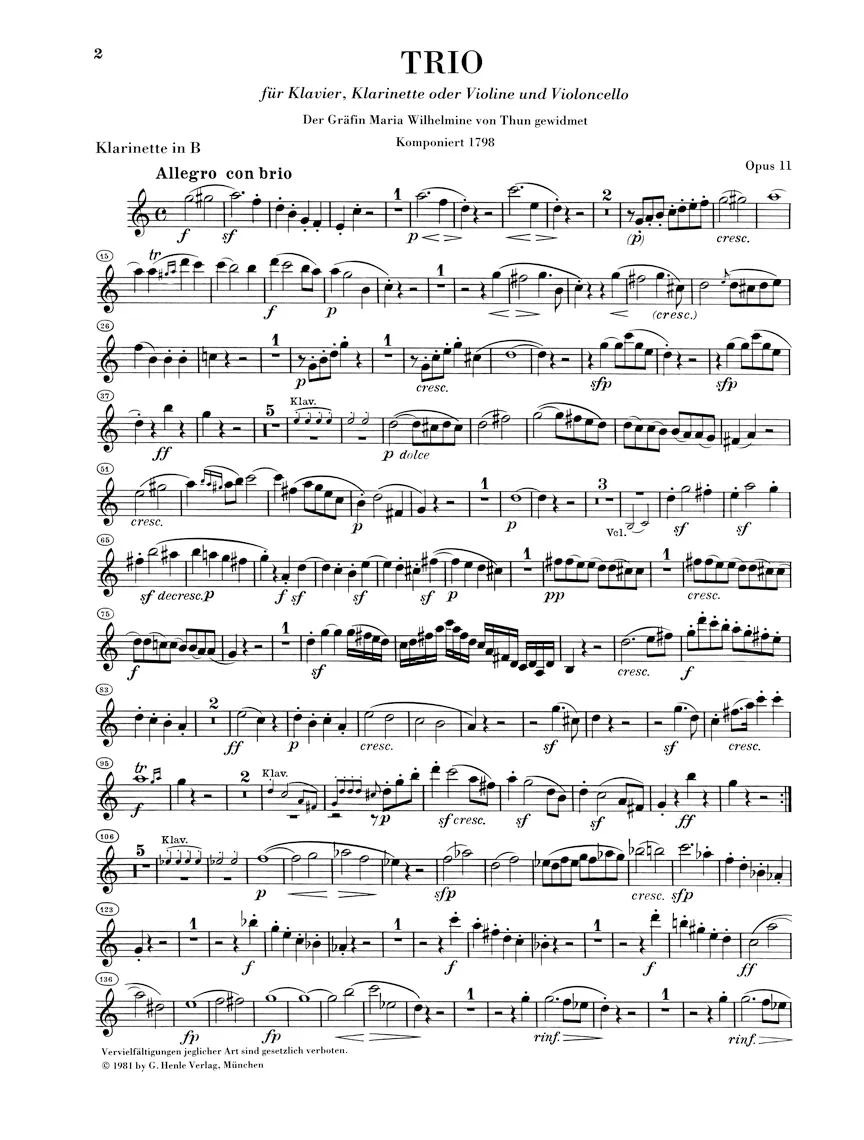
Beethoven composed his Clarinet Trios op. 11 and 38 in 1798 and 1802/03. The op. 11 was given the nickname "Gassenhauer Trio" because its third movement is a set of variations on a theme from Joseph Weigl's opera L'amor marinaro ("Gassenhauer" means a "popular song"). Playing with many possibilities in these nine variations, Beethoven sometimes lets the piano appear alone, and sometimes has it rest. In places the mood is that of a sort of funeral march, and there are harmonic and rhythmic surprises throughout. The op. 38 "Grand Trio", the later of the two, was a reworking by Beethoven himself of his op. 20 Septet. He provided - as also in the case of op. 11 - an alternative violin part, in order to give the work broader distribution and thus greater popularity. The violin parts are likewise included with our Urtext edition, which - just as back then- makes it doubly valuable.
Details & Craftsmanship
Every detail has been carefully considered to bring you the perfect product.
Details & Craftsmanship
Every detail has been carefully considered to bring you the perfect product.

Details & Craftsmanship
Every detail has been carefully considered to bring you the perfect product.
Details & Craftsmanship
Every detail has been carefully considered to bring you the perfect product.
Description
For Piano, Clarinet (or Violin) and Cello
Beethoven composed his Clarinet Trios op. 11 and 38 in 1798 and 1802/03. The op. 11 was given the nickname "Gassenhauer Trio" because its third movement is a set of variations on a theme from Joseph Weigl's opera L'amor marinaro ("Gassenhauer" means a "popular song"). Playing with many possibilities in these nine variations, Beethoven sometimes lets the piano appear alone, and sometimes has it rest. In places the mood is that of a sort of funeral march, and there are harmonic and rhythmic surprises throughout. The op. 38 "Grand Trio", the later of the two, was a reworking by Beethoven himself of his op. 20 Septet. He provided - as also in the case of op. 11 - an alternative violin part, in order to give the work broader distribution and thus greater popularity. The violin parts are likewise included with our Urtext edition, which - just as back then- makes it doubly valuable.